
7 min read
Print the one-page calendar and keep it somewhere you will find it.
The short version
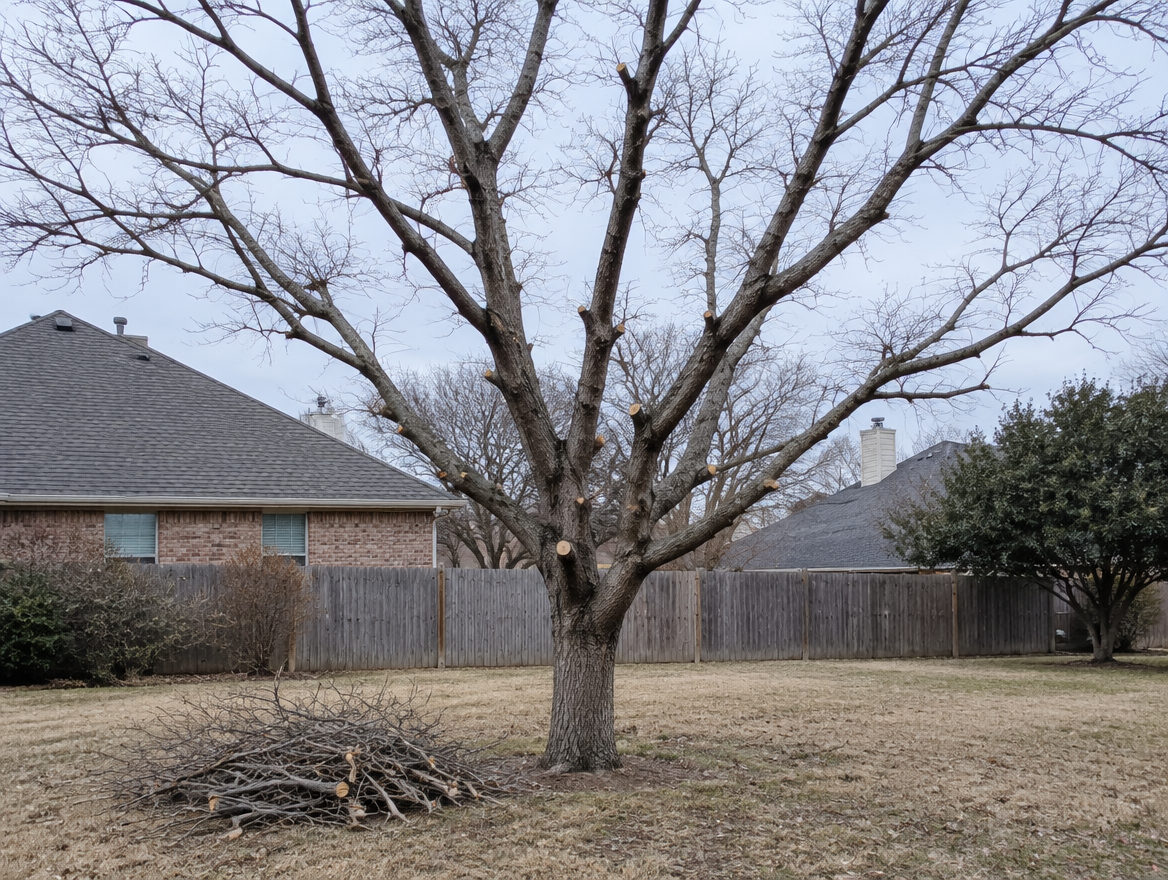
For most trees in North Texas, prune in late winter. Think January into February, while the tree is asleep and before spring growth starts.
Four things make that the right window. The tree is not spending energy on leaves, so it can put what it has into sealing the cut. You can see the shape. Wounds close fast once growth restarts. And the beetles that carry disease from tree to tree are not flying yet.
The exception that matters most here: do not prune oaks between February and June. More on that below, because in this part of Texas it is not a preference, it is the difference between a healthy oak and a dead one.
Month by month
December to February: the main window
The best time for structural pruning on most hardwoods. Take out crossing limbs, clear the roof and the drive, reduce weight on long horizontal limbs, and correct the shape while you can see it. Wounds made now close fastest when the tree wakes up.
February to June: hands off the oaks
This is oak wilt season. The beetles that carry the fungus are active and are drawn to fresh cuts. A pruning wound on an oak in spring is an open invitation. If an oak must be cut in this window, because a limb broke or is threatening something, paint the wound immediately. Every cut, every time, within minutes rather than hours.
March to May: watch, do not cut
Spring growth is the best diagnostic you get all year. A limb that leafs out thin, late, or not at all is showing you what the bare canopy hid. Note it and deal with it in the dormant season unless it is a hazard.
June to August: light work only
Summer pruning slows a tree down, which is occasionally what you want on something outgrowing its space. Keep it light. Heavy summer cuts on a stressed tree in a North Texas August are a bad combination, and removing too much canopy exposes bark that has never seen direct sun to sunscald.
September to November: storm prep
A good time to take weight off limbs hanging over the house before winter. Also to clear anything growing into a service line.
Avoid heavy cuts in early autumn. They push out soft new growth right before the first freeze.
Dead and dangerous limbs ignore the calendar
All of the above is about pruning you choose to do.
A dead limb over the drive comes off when you find it. So does a cracked branch after a storm, or anything grown into a power line. The month does not matter. The risk of leaving it beats any seasonal argument for waiting.
Species that do not follow the general rule
| Tree | Best window | Why |
|---|---|---|
| Live oak, red oak, post oak | July to January | Avoid oak wilt season entirely. Paint every cut, in any month. |
| Pecan | Dormant, late winter | Bleeds heavily if cut in late spring. Not fatal, but messy and stressful for the tree. |
| Crape myrtle | Late winter | Prune lightly. The hard topping people do every February is disfiguring and unnecessary. |
| Mesquite | Dormant or summer | Tolerant of most timing. Structural work is easier with leaves off. |
| Fruit trees | Late winter | Prune before bud break to shape and to set up the crop. |
| Spring-flowering ornamentals | Just after they bloom | Winter pruning cuts off the flower buds already set. |
Three mistakes worth avoiding
Topping. Cutting a tree back to stubs is the most damaging thing commonly done to trees. It removes the leaves the tree lives on and forces weak, fast regrowth that is more likely to fail later, not less. Do not let a crew talk you into it.
Flush cuts. Cutting tight against the trunk removes the branch collar, which is the tissue that seals the wound. Cut just outside it.
Taking too much at once. A rough ceiling is a quarter of the live canopy in one season, and less on an older or stressed tree. If a job needs more than that, it needs two seasons.